
Businesses turn to sensory marketing to stand out on crowded shelves
Written By: Jeff Howicz
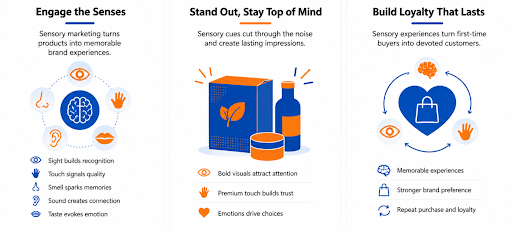
Customers are drowning in advertising—on phones, social media, streets, storefronts—everywhere. Standard campaigns blur together, and brands that rely on rational messaging and price alone lose in the noise. Sensory marketing changes this equation, TEAM Concept reports. By engaging sight, touch, smell, sound, and taste, brands can trigger emotional responses that drive purchasing decisions far more effectively than logic or price comparison ever could. The brands that stand out are the ones that create experiences customers remember and want to come back for.
Sensory marketing is an advertising strategy that uses sensory inputs to create a unique experience that customers learn to associate with a specific brand. Like how a whiff of Play-Doh’s unique scent (a registered trademark) triggers childhood memories.
Why Emotional Triggers Matter More Than Price
Studies show that emotions play an important role in decision-making, whether it’s choosing between two brands of tea or selecting a new car.
By engaging the audience’s senses, brands hope to bypass the rational side of the brain and go directly to the emotional side. Smells, designs, textures, sounds, and tastes are extremely valuable for the marketing specialist because they can trigger powerful emotions that steer decisions better than any price comparisons.
Here are a few examples of how brands have used these strategies for decades.
Sight
Why is Coca-Cola so attached to its signature red and white colors? Why is Nike adamant about its iconic logo’s shape?
Both are examples of visual cues that audiences around the world immediately associate with the brand. A logo or the right shade of red and white is enough to evoke an entire experience (elite performance in Nike’s case and joy and happiness in Coca-Cola’s case).
Touch/Feel
The easiest way to create the perception of quality and premiumness is through touch. A heavy glass bottle, lacquered surfaces, embossed elements on the packaging, high-quality cardboard, metallic foil, or sleek designs create a tactile experience that screams, “Hey, I’m better than the other brand’s product!”
Luxury brands and high-end electronics manufacturers (such as Apple) offer a lesson in tactile sensory marketing. For Apple, everything is designed to impress the buyer’s eyes and fingers during unboxing and later on, while using the device.
High-end cosmetics brands, on the other hand, present their products like jewelry. Everything from high-quality packaging to the bottle/container that holds the product is designed to feel good to the touch and communicate perfection and elegance.
Smell
Scent is a powerful emotional trigger and is often associated with long-term memories. Sometimes, it’s enough to get a whiff of a favorite scent as a child (grandmother’s butter cookies, for instance) and a bunch of memories from long ago will start pouring in.
Studies found that some fragrances can boost productivity or the ability to focus. Meanwhile, many people use aromatherapy for relaxation and mood improvement. This is why high-end stores and similar establishments use pleasant fragrances to convince buyers to stay longer than initially planned.
Sound
Most people remember the sound of their neighborhood ice cream truck. If they heard it now, they would instantly recognize it. This is a great example of a sensory marketing strategy based on sound.
Another iconic sound that children and adults from around the world know and love is Disney’s opening credits theme. In social media, AI-driven marketing tools can help teams test which recurring cues and formats get remembered fastest, then schedule them at the right cadence. It only takes a few seconds of this beautiful song to be transported to a whole new world of magic and wonder.
But auditory cues are not just for triggering nostalgic feelings; brands also use them to create a feeling of satisfaction and recognition. The iPhone's lock sound exemplifies this. It's universally recognizable and gives users a sense of security.
The sound of a car door closing has the same effect, while the sound of a Sharpie marker makes users think of durability and performance.
Taste
People’s connection with food is reflected through taste, which is why so many sensory marketing campaigns use it to evoke strong emotions of comfort, warmth, or nostalgia. However, it’s not specific to the food and beverage industries.
Cosmetic brands also use customers’ sense of taste to create a more vivid experience. From lip gloss products that look and taste like strawberries to Hailey Bieber’s Rhode campaign that literally uses foods to form strong associations in viewers’ minds, taste is a fantastic driver.
Starbucks does the same thing with its Pumpkin Spice Latte. It’s not just a fancy beverage; it’s a universal sign that autumn is back on the menu.
Why Visual and Tactile Triggers Deliver the Highest ROI
While different audience segments may need different stimuli, the most common sensory marketing strategies involve visual and tactile triggers. That’s because the easiest way to stand out on a crowded shelf is through high-quality, visually appealing packaging.
Brands use a combination of visual design and high-end printing to create an impactful experience that’s satisfactory from the first glance and touch until the product is revealed.
A Page From the Cosmetics Industry Book
A great example of how cosmetics brands use sight and touch to command buyers’ attention comes from Fenty Beauty (Rihanna’s brand) with its soft-touch velvet-matte laminated boxes that create visual and tactile pop.
To create contrast, Rihanna's logo and graffiti-inspired background elements were finished with high-gloss Spot UV coating and debossed foil. As a result, these tiny jewelry-like boxes draw the buyer’s eye wherever they are.
How Micro-Embossing and Metallic Finishes Signal Craftsmanship
Another example comes from Fever-Tree, the producer of premium mixers beloved by party-goers who want quality and prestige.
Unlike standard carbonated soft drinks that rely on thin, smooth plastic or paper labels, Fever-Tree uses coarse, tactile paper stock featuring micro-embossing on the tree branding and lettering.
This is the first signal of craftsmanship and organic quality. The second one is the metallic gold foil stamping on the primary logo tree and borders. Set against a muted matte color palette, the logo is designed to visually pop under retail fluorescent lighting.
Building Customer Loyalty Through Sensory Differentiation
Buyers are already desensitized to standard campaigns, which is why more brands now focus on sensory marketing to stand out from the crowd.
The payoff is measurable: Brands that invest in sensory experiences build stronger customer loyalty, command premium pricing, and maintain differentiation even as markets saturate with competitors. In a crowded marketplace, sensory experiences aren't a luxury—they're survival.
Let’s talk about your packaging! At TEAM Concept Printing, we specialize in making luxurious and high-quality packaging that stands out on the shelf with special effects and embellishments.